Damp is common in UK homes. Finding the right damp proof company isn’t.
You notice a musty smell. Paint starts peeling. Maybe there’s a patch of black mould creeping along the wall. The first instinct is simple: search “damp proofing near me” and call the first company that appears.
But that’s where most homeowners go wrong.
Damp isn’t the same problem. What looks like rising damp could actually be condensation. What seems like a leak might be penetrating damp. If the cause isn’t diagnosed properly, the treatment won’t work. And that often leads to wasted money, repeated repairs, and the same issue returning months later.
The good news is that reliable local damp specialists are out there. You just need to know where to look and how to choose one properly. This guide walks you through exactly that.
Quick Answer: How Do You Choose the Right Damp Proof Company?
If you’re short on time, here’s what matters most:
- Choose a company that diagnoses the cause, not just treats symptoms
- Look for qualified damp surveyors, not just general contractors
- Prioritise local experience with UK housing types
- Expect clear reports, not vague quotes
- Avoid anyone recommending treatment before a proper inspection
The reality is simple. The wrong choice doesn’t just cost money. It often means the damp comes back, and you end up paying twice to fix the same issue.
Where to Find Reliable Local Damp Proofing Companies (UK)
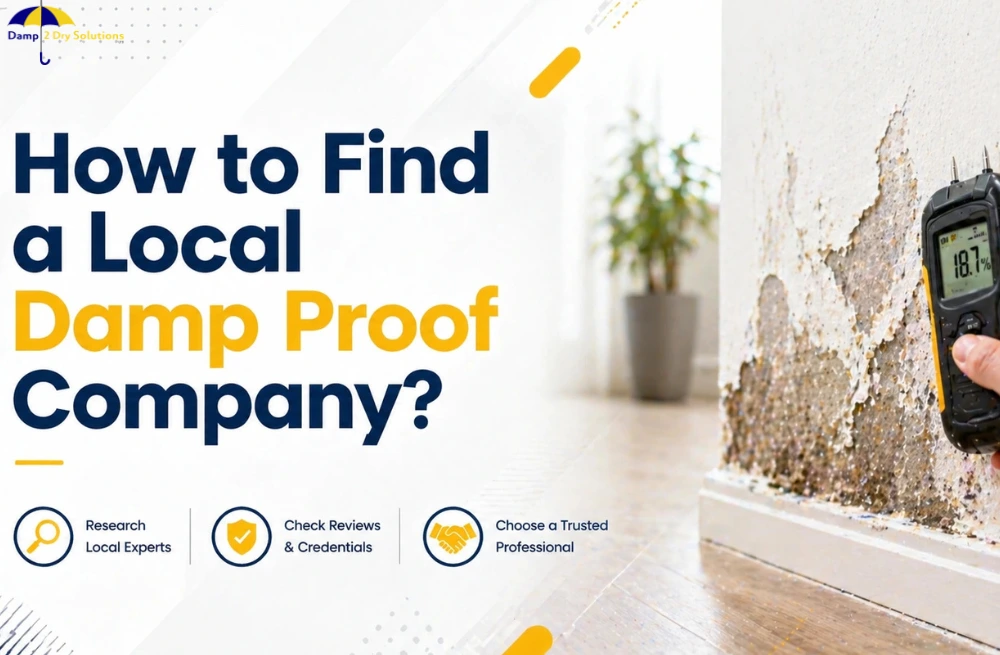
Finding a damp specialist isn’t just about typing “near me” and calling the first result. The most reliable companies tend to appear across multiple trusted sources, and knowing how to assess each one properly makes all the difference.
1. Google Search (Start Here, But Filter Properly)
Most homeowners begin with searches like “damp proofing company near me” or “damp survey [your area]”. That’s a good starting point, but don’t rely on rankings alone. Look beyond star ratings. Focus on reviews that mention actual outcomes, check for photos of completed work, and see whether the company talks about damp surveys, not just treatments. If a business pushes a solution without explaining diagnosis, treat that as a red flag.
2. Trusted UK Trade Platforms
Platforms such as Checkatrade, TrustATrader, Rated People, and MyBuilder help validate credibility. Look for:
- Verified and consistent reviews
- Repeated mentions of damp-specific work
- Feedback that reflects long-term results
Avoid profiles that only highlight general building services.
3. Local Specialist Websites
Reputable damp companies often have strong local presence rather than aggressive ads. Companies like Damp2Dry Solutions can help you fix your damp if you prefer working with genuine damp proof businesses. Check whether they cover your area and review their site for surveys, case studies, and clear explanations of damp types. A credible company focuses on education first.
4. Property Professionals & Word of Mouth
Estate agents, surveyors, and property managers regularly deal with damp issues and can recommend proven specialists. Personal referrals can help too, but only if they include specifics about the type of damp, results, and follow-up support.
Step-by-Step: How to Find a Reliable Local Damp Proofing Company
If you have never looked for a local damp proof company before, this is how you should do it to maximise your search and find the best local businesses for damp proofing.
1. Start With Local Search (But Don’t Stop There)
Local knowledge matters more than most homeowners realise. Properties across areas like Cheshire, Manchester & Lancashire, and Liverpool & Merseyside often share similar construction styles, especially older terraces and Victorian homes. These buildings come with recurring damp patterns, from poor ventilation to ageing brickwork.
A company that works locally is far more likely to recognise these issues quickly and recommend the right fix. They are also easier to contact, revisit, and hold accountable if something doesn’t go as planned. Start with local searches, but always cross-check what you find.
2. Check Whether They Offer a Proper Damp Survey
Not every company starts with a proper survey, and that’s where problems begin. A reliable damp specialist should assess before recommending anything.
A proper survey typically includes:
- Moisture readings using specialist tools
- Identification of the exact damp type
- A clear explanation of the root cause
- A written report outlining findings
Be cautious of companies that give instant quotes over the phone or suggest the same solution for every property. Damp issues vary, and the approach should reflect that.
3. Check Their Experience Across Different Damp Problems
This is often overlooked, but it’s one of the clearest indicators of whether a company can actually solve your issue. In the UK, damp rarely comes in one form. A single property can have condensation in one room, penetrating damp in another, and signs that look like rising damp elsewhere. That’s why experience across multiple damp types matters more than anything.
Look for companies that regularly handle:
- Rising damp
- Penetrating damp
- Condensation and ventilation issues
- Timber-related problems like rot or damp in floors
An experienced specialist will not jump to one conclusion. Instead, they will assess the full picture and explain how different factors may be contributing to the problem.
4. Understand Their Approach to Diagnosis vs Treatment
A good damp company will take time to explain what’s happening and why. This is where you separate genuine specialists from sales-led contractors. Ask simple questions like:
- What’s causing the damp?
- What are the available solutions?
If the answer is vague or jumps straight to treatment, take a step back. Reliable companies often outline more than one approach, depending on severity and budget.
5. Read Reviews, But Read Them Properly
Reviews can be helpful, but only if you read them with intent. Don’t focus on star ratings alone. Look for patterns in feedback. Pay attention to:
- Mentions of long-term results
- Whether issues returned after treatment
- Communication and aftercare experience
Strong reviews usually describe the full journey, from survey to completion.
6. Compare Quotes the Right Way
Two quotes can differ significantly even when they’re for the same issue. One may include full plaster removal and reinstatement, while another only covers the damp treatment itself. When comparing, look at:
- Scope of work
- Materials and methods used
- Guarantees offered
- Disruption, drying time, and finishing
Choosing purely on price often leads to incomplete work or additional costs later.
7. Ask About Guarantees and Aftercare
Damp treatment should be a long-term solution, not a temporary fix. That’s why guarantees matter. Look for:
- Insurance-backed guarantees
- Clear timeframes, often between 10 and 20 years depending on the treatment
- Written documentation you can rely on
Avoid companies that rely on verbal promises. A professional business will always put their commitment in writing and be clear about what’s covered.
How Much Should a Damp Survey or Treatment Cost? (UK Guide)
Damp proofing costs in the UK can vary widely, which is why homeowners often receive very different quotes for what seems like the same issue. In most cases, the total cost depends on the type of damp, how far it has spread, and how much repair work is needed after treatment.
As a general guide, a damp survey typically costs between £150 and £350, while chemical DPC injection ranges from £70 to £120 per metre. For a full room treatment, including replastering and finishing, most homeowners spend between £1,000 and £3,000 or more, depending on severity.
Here’s a clearer breakdown based on typical UK pricing:
| Type of Work | Average Cost (UK) |
| Damp survey | £200 – £300 |
| DPC injection | £500 – £1,200 |
| Replastering (per room) | £450 – £800 |
| Rising damp treatment (full wall) | £500 – £2,500 |
These figures highlight why quotes differ. One contractor may only include the damp treatment, while another includes plaster removal, restoration, and finishing work.
Costs are mainly influenced by:
- Size of the affected area
- Severity of damp damage
- Type of damp involved
A lower quote may seem appealing, but it often excludes essential work like replastering or aftercare. In most cases, paying slightly more upfront for a complete solution prevents repeat issues and higher long-term costs.
When Should You Book a Damp Survey?
In many UK homes, especially across areas like Manchester, Liverpool, and Cheshire, damp often builds up quietly before becoming visible. By the time it shows on walls, the underlying issue has usually been there for months. That’s why timing matters.
You should consider booking a damp survey:
- Before buying or selling a property, where damp can affect valuation and negotiations
- When you notice early warning signs such as musty smells, peeling paint, black mould, or tide marks
In older terraced or Victorian homes, these signs are often linked to ventilation or ageing materials. Acting early allows you to diagnose the cause properly and avoid more extensive repairs later.
Final Thoughts
The difference between a temporary fix and a long-term solution comes down to diagnosis.
The best damp proofing companies don’t just carry out work. They identify the root cause, explain it clearly, and recommend the right approach for your property.
A proper survey from us at Damp2Dry Solutions will help you save money, time, and stress in the long run.
We have local knowledge, serving Manchester, Liverpool & Merseyside, Stoke-on-Trent, Chester, Warrington, and Cheshire, verified experience, and the right qualifications are what separate a quick fix from a lasting solution.
FAQs
How do I find a reliable damp proofing company near me?
Search locally, check qualifications, and prioritise companies that offer detailed damp surveys rather than instant treatment quotes.
Is a damp survey worth it before treatment?
Yes. A proper survey identifies the exact cause of damp and prevents unnecessary or incorrect work.
Can a builder fix damp problems?
Builders can repair visible damage, but they typically cannot diagnose the underlying cause of damp accurately.
How long does damp proofing last?
When correctly diagnosed and treated, damp proofing can last 20 years or more depending on the method used.