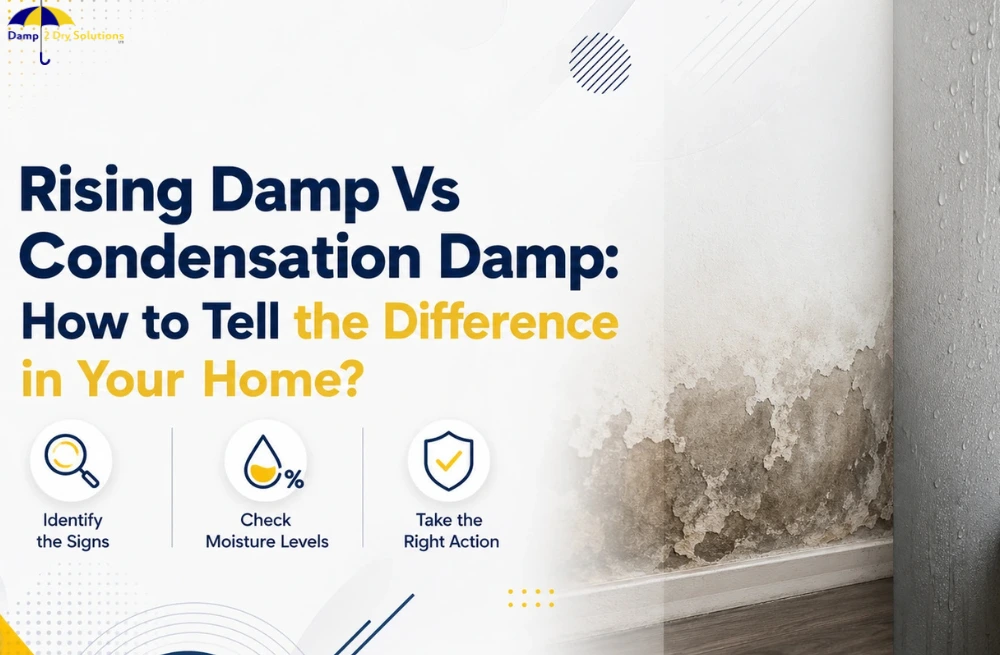
Damp is common in UK homes, but telling one type from another is where most people struggle. A typical example is rising damp vs condensation damp. Both can cause peeling paint, mould, and damp patches, which makes them easy to confuse.
You might notice a problem, try a quick fix, and see it return weeks later. That’s usually a sign the cause hasn’t been properly identified. In these cases, finding a reliable local damp proofing specialist through Google, trade directories, or reviews can make a real difference. A proper assessment helps you avoid guesswork and ensures the right treatment is used from the start.
Key Takeaways: Rising Damp vs Condensation Damp
- Rising damp and condensation damp may look similar, but they come from completely different sources, which makes correct diagnosis essential before starting any treatment.
- Rising damp originates from ground moisture travelling through walls, while condensation damp forms from excess indoor humidity settling on cold surfaces within the home.
- Location, pattern, and timing of damp symptoms are the most reliable indicators, helping homeowners distinguish between structural damp issues and ventilation-related problems.
- Many UK homes, especially older properties, can experience both rising damp and condensation together, making professional assessment important to avoid partial or ineffective solutions.
- Treatment approaches differ entirely, with rising damp requiring structural repairs such as damp proof courses, while condensation is managed through ventilation, insulation, and moisture control.
- A professional damp survey provides clarity by identifying the root cause, ensuring the right solution is applied and preventing recurring damp problems and unnecessary costs.
Why Homeowners Often Get Confused Between Rising and Condensation Damp?
Homeowners often confuse rising damp and condensation damp because both cause damp patches, mould, and peeling paint. In many UK homes, especially older properties, both issues can occur together. Without proper diagnosis, it’s easy to treat the wrong problem, which is why understanding the difference between condensation and rising damp is essential before any repairs are made.
What Is Rising Damp?
Rising damp is a structural issue where moisture from the ground travels upwards through walls. This happens through a process called capillary action, where water moves through porous building materials like brick and mortar.
Most properties are built with a damp proof course (DPC), which acts as a barrier to stop this moisture rising. When that barrier fails, is missing, or has been bridged, moisture can move freely into the walls.
This type of damp is more common in older UK properties, especially those built before modern damp proofing standards were introduced. It develops slowly over time, which is why it often goes unnoticed until visible damage appears.
What Is Condensation Damp?
Condensation damp is caused by moisture already inside your home. Everyday activities like cooking, showering, and drying clothes release water vapour into the air. When that warm, moist air comes into contact with cold surfaces, it turns back into water.
This is why condensation is often seen on windows, walls, and ceilings, particularly in rooms with poor ventilation. Modern homes, which are more insulated and airtight, can actually be more prone to this type of damp if airflow is restricted.
Unlike rising damp, condensation can appear quickly and is often worse during colder months when windows stay closed, and indoor humidity builds up.
The Core Differences of Rising Damp Vs. Condensation Damp
Differences in rising damp and condensation damp are easy to point out and understand once you understand them better. Here are the differences you should know between these types of damp issues:
| Feature | Rising Damp | Condensation Damp |
| Source | Moisture drawn up from the ground through walls | Moisture already inside the home (air humidity) |
| Where it appears | Starts at ground level and moves upwards (usually up to 1 metre) | Appears on cold surfaces like windows, ceilings, and external walls |
| How quickly it develops | Gradual and persistent over months or years | Can form overnight, especially after cooking or showering |
| Mould presence | Rare, unless combined with condensation | Very common, especially black mould in corners |
| Seasonal pattern | Present all year round | Worse in colder months when windows stay closed |
This is where most homeowners go wrong. Rising damp is caused by water entering your walls from below, making it a structural issue. Condensation, on the other hand, forms on surfaces due to moisture in the air.
If the damp feels like it’s coming through the wall, it points towards rising damp. If it appears on the surface and can be wiped away, condensation is more likely.
What often gets missed is how these patterns behave over time. Rising damp tends to leave consistent marks at a fixed height and slowly worsens if untreated. Condensation is more reactive. It changes daily depending on heating, ventilation, and how the space is used. You may notice it disappear during warmer days and return quickly in colder conditions.
Another useful check is touch and texture. Condensation usually feels wet on the surface, while rising damp often feels deeper within the wall, with visible damage like flaking plaster or salts. These small differences can help you make a far more accurate initial judgement before calling in a professional.
7 Clear Signs It’s Rising Damp
Rising damp follows a predictable pattern because it originates from the ground and moves upwards. These signs can help you identify it with more confidence:
- Tide marks or horizontal staining on walls
Distinct horizontal lines form as moisture rises and leaves visible staining at a consistent level along the wall.
- Damp restricted to ground floor areas
Rising damp typically affects only ground-level walls, as moisture cannot travel significantly beyond the first metre.
Salts carried from the ground remain on plaster, leaving a chalky residue even after the surface appears dry.
- Skirting boards showing signs of rot or lifting
Timber skirting absorbs moisture over time, leading to warping, decay, or separation from the wall.
- Paint or plaster deteriorating from the bottom up
Damage usually starts near the floor and gradually works upward as moisture continues rising through the wall.
- Damp patches that stay at a consistent height
Unlike condensation, rising damp creates uniform patches that don’t randomly spread or shift around the wall.
- No connection to daily activities or humidity levels
The issue remains constant regardless of cooking, heating, or ventilation, indicating a structural moisture source.
7 Clear Signs It’s Condensation Damp
Condensation behaves differently because it depends on indoor air moisture and temperature changes. These signs point clearly towards condensation damp:
- Water droplets forming on windows in the morning
Overnight cooling causes moisture in the air to settle on cold glass surfaces, leaving visible droplets.
Poor airflow creates damp pockets where mould thrives, especially in colder, less ventilated parts of rooms.
- Damp patches that seem to appear overnight
Condensation can form quickly, often becoming noticeable within hours after activities like cooking or showering.
- Problems worsening during colder months
Reduced ventilation and colder surfaces increase condensation risk, making symptoms more noticeable in winter.
- Issues concentrated in kitchens, bathrooms, and bedrooms
These areas produce the most moisture, making them more vulnerable to condensation-related damp problems.
- Noticeable lack of ventilation or airflow
Blocked vents, closed windows, or poor extractor systems allow humidity to build up and settle on surfaces.
- Damp reducing temporarily when heating or windows are used
Increasing airflow or warmth helps moisture evaporate, which is why symptoms often improve temporarily.
Can You Have Both at the Same Time?
Yes, and it’s more common than many homeowners realise.
Rising damp can make walls colder, which in turn increases the likelihood of condensation forming on those surfaces. This creates a cycle where both problems feed into each other.
In these cases, treating only one issue will not fully resolve the problem. This is why a proper diagnosis is essential before any work begins.
How Professionals Actually Diagnose the Difference
A proper damp survey goes beyond what you can see. Specialists use a combination of tools and experience to identify the root cause:
- Moisture meter readings to check surface and internal moisture levels
- Analysis of salts in plaster to confirm rising damp
- Inspection of the damp proof course and surrounding structure
- Assessment of ventilation and humidity levels inside the property
- External checks, including ground levels and drainage systems
This level of detail is what separates a guess from a reliable diagnosis.
Treatment Approaches for Rising and Condensation Damp
Because the causes are completely different, the treatment methods must also be tailored accordingly. Applying the wrong solution often leads to recurring issues and unnecessary expense.
Rising Damp Treatments
Rising damp requires structural solutions that stop moisture entering the walls and repair the damage already caused. These treatments focus on creating barriers and restoring affected materials.
Damp Proof Course (DPC) Injection or Installation
A chemical damp proof course is injected into affected walls to create a barrier that stops moisture rising from the ground. In older properties, a new physical DPC may be installed if none exists.
Replastering with Salt-Resistant Materials
After treating the source, damaged plaster is removed and replaced with specialised salt-resistant plaster. This prevents residual ground salts from attracting moisture and causing further surface deterioration over time.
Lowering External Ground Levels
Sometimes rising damp is caused by external ground or paving being too high, bridging the damp proof course. Lowering these levels restores the barrier and prevents moisture from entering the wall structure.
Improving Drainage and External Defects
Blocked drains, leaking gutters, or poor runoff can increase moisture around the property. Fixing these issues reduces water pressure against walls and supports long-term damp prevention.
Condensation Damp Treatments
Condensation damp is managed by controlling indoor moisture levels and improving airflow. These treatments focus on reducing humidity and preventing moisture from settling on cold surfaces.
Improving Ventilation Systems
Installing or upgrading extractor fans, air vents, or positive input ventilation (PIV) systems helps remove excess moisture from indoor air, reducing the chances of condensation forming on cold surfaces.
Using Dehumidifiers for Moisture Control
Dehumidifiers can help manage indoor humidity levels, especially in problem areas. While not a permanent fix, they are effective in reducing excess moisture in the short term.
Adjusting Daily Habits That Increase Moisture
Simple lifestyle changes, such as covering pans while cooking, drying clothes outdoors, and opening windows regularly, can significantly reduce the amount of moisture released into the air.
Improving Insulation to Reduce Cold Surfaces
Cold walls and windows encourage condensation. Adding insulation, such as thermal boards or double glazing, helps maintain warmer surface temperatures and reduces moisture settling.
Trying to fix rising damp with ventilation, or condensation with structural treatments, rarely works. Correct diagnosis is what ensures the right solution is applied.
When Should You Book a Damp Survey?
There are certain situations where a professional survey becomes essential rather than optional.
You should consider booking one if you are unsure about the type of damp affecting your property, especially when symptoms don’t clearly point to one cause. It is also important before buying or selling a home, as damp issues can significantly impact property value and negotiations.
If you have already tried basic solutions like ventilation or heating adjustments and the problem keeps returning, that’s a clear sign that a deeper issue may be involved. Persistent damp is rarely random and usually points to an underlying cause that needs proper investigation.
Final Verdict: Rising Damp or Condensation, What Matters Most
At a glance, rising damp and condensation can look almost identical. Both can damage your home, affect indoor air quality, and lead to ongoing maintenance issues. But the causes behind them are completely different, and that difference matters more than anything else.
The key is not to rush into treatment. Understanding where the moisture is coming from is far more important than acting quickly with a temporary fix. In many cases, the wrong approach simply delays the problem rather than solving it.
A proper damp survey gives you clarity on what damp proofing you should get. It helps you understand what you’re dealing with, why it’s happening, and what needs to be done to fix it properly. If you need that clarity now, Damp2Dry Solutions can help you save time, money, and unnecessary disruption in the long run.
We serve Manchester, Liverpool & Merseyside, Stoke-on-Trent, Chester, and Warrington from our head office in Cheshire.
Get your free damp survey today!
FAQs
Is rising damp worse than condensation?
Rising damp is generally more serious because it affects the structure of your property. Condensation mainly impacts surfaces and air quality, but prolonged exposure can still lead to mould and health concerns.
Can condensation cause structural damage?
In most cases, condensation affects surfaces rather than structure. However, long-term moisture build-up can damage plaster, timber, and finishes if left untreated.
How high does rising damp usually go?
Rising damp typically rises to around one metre above ground level. If damp appears higher than this, it is usually caused by another issue.
Will a dehumidifier fix rising damp?
No. A dehumidifier can help manage condensation but will not stop moisture rising through walls. Rising damp requires structural treatment.
How do I permanently stop condensation in my home?
Improving ventilation, reducing indoor moisture, and maintaining consistent heating are key. In some cases, additional insulation may also be needed to prevent cold surfaces.