In the UK, homeowners are often advised to carry out different types of property surveys, each designed for a specific purpose. When moisture becomes an issue, the confusion usually comes down to one question: Is it damp, or is something leaking?
Both problems involve water, but they behave very differently and require completely different solutions. Choosing the wrong type of inspection can delay the fix and increase repair costs.
This guide will help you understand the difference, recognise the signs, and decide which inspection you actually need.
What Is a Damp Survey?
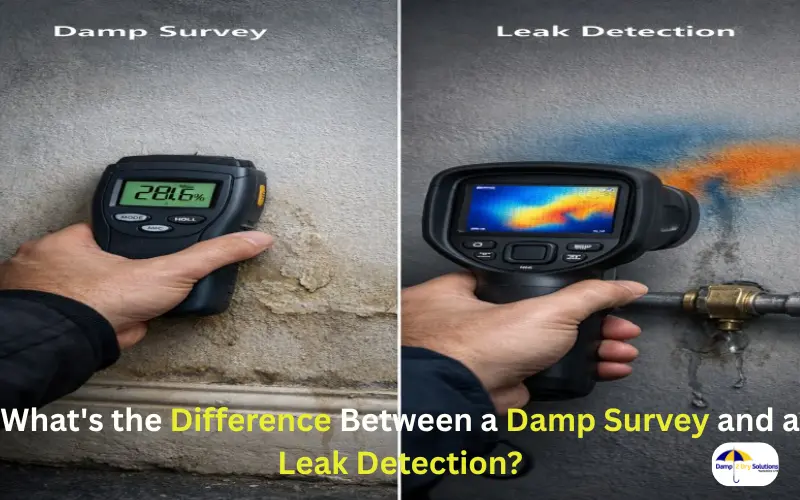
A damp survey is a detailed inspection of how moisture behaves within your property. It focuses on identifying the cause of damp rather than just the visible symptoms.
In simple terms, it answers one question: why is moisture present here?
A qualified specialist will assess different types of damp, including:
- Rising damp, where moisture travels up from the ground through the walls
- Penetrating damp, caused by water entering through external defects
- Condensation, which develops due to poor ventilation and everyday moisture buildup
The inspection goes beyond surface-level checks. A damp specialist evaluates how moisture is distributed across walls and floors, looking for patterns that indicate the source.
Ventilation is also assessed, as poor airflow can trap moisture inside the property. External elements such as brickwork, guttering, and pointing are reviewed to identify where water may be entering.
The outcome is a clear diagnosis, along with practical recommendations tailored to the issue, whether that involves ventilation improvements, repairs, or damp-proofing treatments.
What Is Leak Detection?
Leak detection is a targeted process designed to locate a specific source of escaping water within a property.
It is typically required when there are signs of an active leak, such as sudden water damage or unexplained changes in water usage.
Common scenarios include:
- Hidden pipe leaks behind walls or under floors
- Sudden water ingress with no obvious external cause
- Issues with internal plumbing or underfloor systems
Instead of analysing overall moisture behaviour, leak detection uses specialised tools to pinpoint the source.
These may include:
- Thermal imaging to identify temperature changes caused by moisture
- Acoustic sensors to detect the sound of escaping water
- Tracer gas to track leaks in enclosed systems
The outcome is precise: the exact location of the leak is identified so repairs can be carried out efficiently.
Signs You Need a Damp Survey
There are certain signs that only occur when your house is damp and needs a survey. These are:
- Damp patches are developing gradually over time
- Mould forming in corners or behind furniture
- Persistent musty smells
- Peeling paint or bubbling plaster
- No obvious or visible water source
These signs usually indicate moisture that has built up over time rather than a sudden water escape. Damp tends to follow patterns across walls, ceilings, or floors, often linked to ventilation issues, external defects, or moisture rising through the structure.
When there is no clear trigger or plumbing connection, a damp survey helps identify how and why moisture is behaving this way.
Signs You Need Leak Detection
Some signs only arise when leaks are taking over your property. These can be:
- Sudden wet patches or watermarks
- Unexplained increase in water bills
- Drop in water pressure
- Damp appears after using plumbing fixtures
- Sounds of water behind walls or floors
These signs suggest active water escape rather than long-term moisture buildup. Leaks are typically more localised and often linked to plumbing usage, which is why damp may appear or worsen after using taps, showers, or heating systems.
A rise in water bills without increased usage is another strong indicator of hidden leakage. Unlike damp, which develops gradually, leaks tend to escalate quickly and require precise detection to locate the source before further damage occurs.
When Both Services May Be Required
In some cases, dampness and leaks overlap.
A slow leak can go unnoticed and eventually create widespread damp, while certain damp symptoms may initially appear unrelated to plumbing.
Where the cause is unclear or the issue has developed over time, both inspections may be needed. Starting with the right one helps avoid duplication and unnecessary costs.
Which Should You Book First? (A Simple Decision Guide)
The timing and behaviour of the issue usually provide the clearest direction.
If the problem appeared suddenly, particularly after using water systems, leak detection is often the right starting point. If the issue has developed gradually, with no obvious trigger, a damp survey is more appropriate as it assesses broader environmental and structural factors.
When the cause is unclear, starting with a damp specialist can be more effective. A comprehensive survey can rule out common damp causes and indicate whether further investigation is needed. Leak detection is typically recommended when there is strong evidence of an active, localised water source.
What Actually Happens During Each Type of Inspection
Damp Survey: Step-by-Step
A damp survey begins with a walkthrough of affected areas and surrounding spaces.
Knowing what to expect from the visit and how to prepare your property beforehand helps the surveyor access all areas clearly and get accurate results.
Moisture readings are taken across multiple surfaces to identify patterns. Ventilation, insulation, and external conditions are assessed to understand how moisture is entering and moving through the property.
The findings are explained clearly, followed by a structured report outlining the cause and recommended next steps.
Leak Detection: How the Process Works
Leak detection starts with a targeted assessment based on where the issue is suspected.
Specialist tools are used to locate hidden leaks with minimal disruption. Thermal imaging, acoustic equipment, and tracer gas help narrow down the exact source.
Once identified, the leak location is confirmed so repairs can be carried out directly.
How Experts Tell the Difference Quickly
Professionals look at patterns rather than just symptoms.
Damp tends to spread across surfaces in predictable ways, while leaks usually create concentrated areas of moisture. The timing also matters. Gradual issues point to damp, while sudden changes suggest a leak.
Experience plays a key role alongside tools, especially in older UK properties where moisture behaviour can vary significantly.
FAQs
Q. Is damp always caused by a leak?
No. Damp is often caused by condensation, rising moisture from the ground, or external defects like damaged brickwork or gutters rather than plumbing leaks.
Q. Can a damp survey detect hidden leaks?
A damp survey can highlight patterns that suggest a possible leak, but specialist leak detection methods are usually required to accurately confirm and locate the exact source.
Q. Do I need both inspections for the same issue?
Not always. Many moisture issues can be resolved with one inspection, but more complex or unclear cases may require both for a complete and accurate diagnosis.
Q. How quickly can a leak be found?
Most leaks can be located within a few hours using specialist equipment, although more complex or hidden systems may take slightly longer to fully trace.
Q. What if the cause is still unclear after inspection?
Further investigation may be recommended, often combining damp assessment and leak detection methods to ensure the root cause is properly identified and addressed.
Conclusion
Moisture problems in a property are rarely as simple as they appear. What looks like damp could be a hidden leak, and what seems like a leak may actually be long-term moisture buildup.
The key is getting the diagnosis right from the start. This not only saves time and cost but also prevents unnecessary or ineffective treatments.
If you’re unsure what you’re dealing with, a professional damp survey is often the most reliable first step. It provides a complete view of how moisture is affecting your property, helping you understand the root cause rather than just the symptoms.
At Damp 2 Dry Solutions, we focus on accurate, evidence-based damp surveys tailored to UK properties. Whether the issue is rising damp, condensation, or something less obvious, the goal is always the same: identify the problem correctly so it can be resolved properly.
Getting clarity early is what protects your home in the long run.