

Timber rot can quietly damage your home. It often starts in floors, roofs or skirting boards and spreads if the damp problem is not fixed. At Damp 2 Dry Solutions, we treat both wet rot and dry rot across Cheshire, Manchester & Lancashire, Liverpool & Merseyside, Chester, Warrington, Newcastle and Stoke-on-Trent.
What Is Wet Rot?
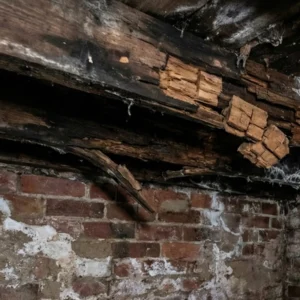
Wet rot happens when wood stays damp for a long time. This can be caused by:
- A leaking roof
- Broken gutters
- Plumbing leaks
- Poor ventilation
Signs of wet rot:
- Wood feels soft or spongy
- Timber looks darker than normal
- Cracks in the wood
- A damp, musty smell
Wet rot usually stays close to the damp area. Once the moisture problem is fixed and damaged timber is replaced, it can be stopped.
What Is Dry Rot?
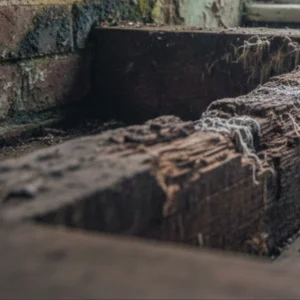
Dry rot is far more aggressive. It is caused by a fungus called Serpula lacrymans, which can spread through masonry and behind plaster in search of moisture.
Signs of dry rot include:
- Brittle, cuboidal cracking timber
- Grey or white fungal growth
- Rust-coloured spores
- Damp, mushroom-like smell
Unlike wet rot, dry rot can travel and spread beyond the original damp source. Early diagnosis is critical.
Our Wet & Dry Rot Treatment Process
We do not guess. We inspect properly.
1. Detailed Timber & Damp Survey
We identify the moisture source, extent of decay, and whether it is wet or dry rot. Accurate diagnosis prevents unnecessary work.
2. Eliminate the Moisture Problem
Rot cannot survive without damp. We resolve the underlying cause, whether that is leaking masonry, rising damp, poor ventilation or failed DPC.
3. Remove & Replace Affected Timber
All structurally compromised timber is removed. We replace it with treated timber that meets current building standards.
4. Specialist Dry Rot Treatment (If Required)
For dry rot cases, we apply professional fungicidal treatments to surrounding masonry and timber to prevent regrowth.
5. Preventative Recommendations
We advise on ventilation improvements and long-term damp control to stop recurrence.
Where Rot Commonly Appears
- Suspended timber floors
- Roof timbers and loft spaces
- Skirting boards
- Window and door frames
- Subfloor voids
- Cellars and basements
Older properties across Manchester, Liverpool, Cheshire and surrounding areas are particularly vulnerable due to traditional construction and limited ventilation.
Areas we cover
We aim to provide a solution to your problems in Cheshire, Manchester & Lancashire, Liverpool & Merseyside, Warrington, Chester, Stoke-on-trent and surrounding areas.
We offer a No-Obligation Damp Survey in these areas.
Book a Timber Decay Survey
If your floor feels soft, your skirting boards are breaking away, or you have noticed signs of fungal growth, do not ignore it. The earlier you deal with timber rot, the easier and less costly it is to fix.
Book a no-obligation survey today. Simply fill in the form and our team will contact you to arrange a convenient appointment.