

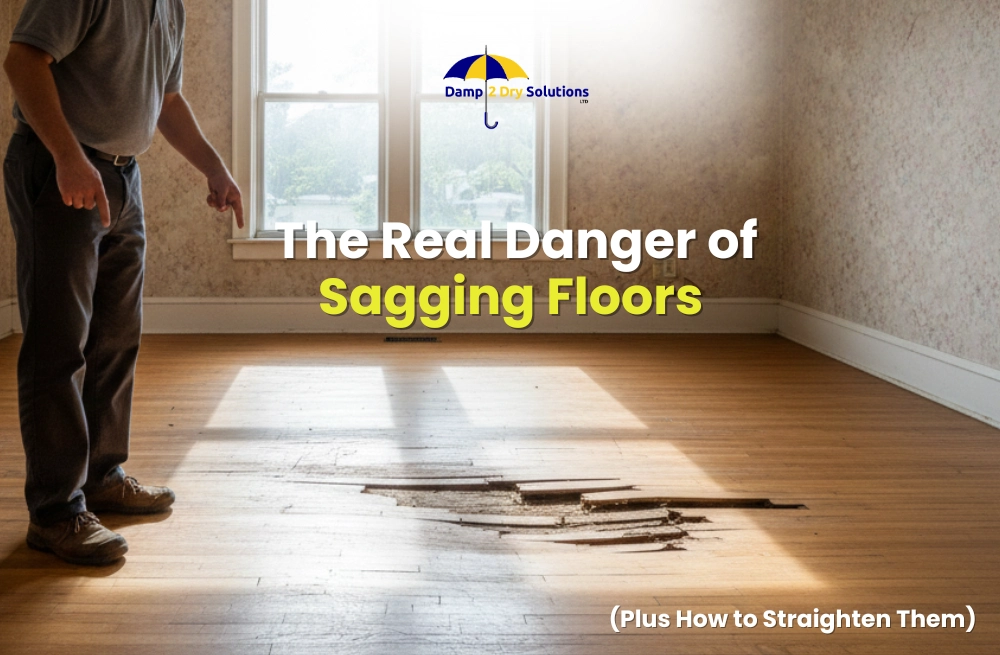
Noticed your lounge floor dipping slightly after a spell of heavy rain? Or found doors suddenly sticking for no obvious reason? In the UK’s damp climate, sagging floors are more common than many homeowners realise. Survey data suggests that around one in five older UK properties shows some degree of floor movement or deflection over time.
While a slight dip might seem harmless at first, sagging floors can indicate deeper structural or moisture-related problems. Left untreated, they can compromise safety, affect insurance cover, and lead to costly repairs. The good news is that most cases can be fixed effectively when addressed early and in line with Building Regulations Part A, which governs structural stability.
This guide explains how to spot the problem, understand the hidden risks, identify common UK causes, and fix sagging floors correctly and compliantly.
Spotting the Problem Early
Sagging floors rarely appear overnight. In most UK homes, especially terraces and period properties, the signs build gradually.
One of the earliest indicators is unevenness underfoot. You might feel a slight bounce when walking across the room or notice furniture subtly leaning. Doors and skirting boards may begin to stick or develop uneven gaps, particularly after wet weather.
Cracks can also form in walls or ceilings, often radiating diagonally from door frames or appearing where internal partitions meet floors. These cracks are not always dramatic but may widen slowly over time, signalling movement below.
Water-related signs are especially common in damp-prone homes. Black mould, peeling wallpaper, bulging plaster, or musty smells often point to moisture affecting the subfloor. In many cases, this links back to failed damp proof courses or poor ventilation beneath suspended timber floors.
Hidden Dangers You Should Not Ignore
Sagging floors are not just cosmetic issues. They often indicate structural weakness, particularly in timber joists. Common culprits include woodworm infestation, wet rot, or long-term overloading of the floor structure.
In severe cases, weakened joists can partially fail, increasing the risk of localised floor collapse. From an insurance perspective, insurers may refuse claims if damage is traced to neglected maintenance or known structural defects.
There are also health and safety risks. Uneven floors increase trip hazards, particularly for children and older occupants. In rental properties, landlords may face compliance issues if floors are deemed unsafe.
Financially, delays tend to be expensive. According to estimates commonly cited by Royal Institution of Chartered Surveyors (RICS), remedial works for structural floor issues typically range between £5,000 and £15,000, depending on severity, access, and underlying cause. Early intervention almost always reduces that figure.
Common Causes of Sagging Floors in the UK
UK housing stock has its own set of vulnerabilities, shaped by soil conditions, construction methods, and climate.
Subsidence is a significant factor in parts of southern England where clay soils shrink during dry spells and swell when wet. This movement can affect foundations and floor supports, leading to unevenness above.
Timber decay remains a widespread issue in older homes without modern damp proof courses. Rising damp allows moisture to travel into floor timbers, creating ideal conditions for wet rot and fungal growth. Over time, affected joists lose their load-bearing capacity.
Another increasingly common cause is overloading. DIY loft conversions, bathroom refits, or removal of internal walls often place additional stress on floors. When load-bearing rules are ignored or misunderstood, joists designed for light domestic use may become overstressed.
Poor ventilation beneath suspended floors, blocked air bricks, and leaking pipework further compound these problems, especially in Victorian and Edwardian properties.
Step-by-Step Fixes That Work
Fixing a sagging floor correctly starts with understanding the severity and cause.
1. Assess the Severity
Engage a qualified surveyor to carry out a Level 2 survey. A chartered professional from Royal Institution of Chartered Surveyors (RICS) typically charges between £400 and £800. This survey identifies structural movement, moisture sources, and timber condition, providing a clear repair roadmap.
2. Install Temporary Support
Where joists are visibly deflecting, Acrow props can be installed beneath the affected area. These provide immediate stabilisation and prevent further movement while permanent repairs are planned.
3. Carry Out Permanent Repairs
Solutions depend on the underlying issue:
- Joist sistering, where new timbers are fixed alongside existing joists, restores strength without full replacement.
- Targeted joist replacement may be required if decay is advanced.
- For subsidence-related movement, resin injection or localised underpinning can stabilise the ground beneath.
Costs typically range from £80 to £120 per square metre, excluding finishes.
4. Finish and Reinstate
Once structural integrity is restored, floors are levelled using a self-levelling compound. Final finishes such as floorboards, laminate, or carpet can then be relaid safely.
Preventing Future Problems
Prevention is often overlooked but essential, especially in damp-prone regions.
Regularly maintain gutters and downpipes to prevent water tracking down external walls. Ensure air bricks remain clear to promote underfloor ventilation. Treat exposed timber annually with appropriate preservatives, particularly in older properties.
Annual inspections for woodworm activity, damp patches, and musty odours can catch issues early. For listed buildings, routine checks are especially important, as repair options may be more limited and costly.
When to Call the Professionals
Not all floor issues are suitable for DIY fixes. Any work involving load-bearing elements should be handled by qualified professionals.
Structural engineers and builders accredited by the Federation of Master Builders can provide compliant quotes and workmanship. If you live in a semi-detached or terraced property, structural floor works may also trigger obligations under the Party Wall Act, making professional guidance essential.
Attempting structural repairs without proper assessment risks further damage, invalidated insurance, and potential legal disputes with neighbours.
Why Homeowners Trust Damp Solutions
When sagging floors are linked to damp, timber decay, or hidden moisture problems, getting the diagnosis right matters just as much as the repair. Damp2Dry Solutions specialises in identifying and resolving the root causes behind structural floor issues, not just covering up the symptoms. From detailed damp surveys to timber treatments and structural remedial works, our approach is thorough, compliant, and tailored to the realities of UK housing stock.
We work with homeowners to ensure all solutions align with current Building Regulations, protect long-term property value, and stand up to insurer and surveyor scrutiny. If your floors are showing signs of movement, moisture damage, or decay, Damp2Dry Solutions Ltd. provides clear advice, honest assessments, and practical fixes you can trust.
Final Thoughts
Sagging floors are a warning sign that should never be ignored. In the UK’s damp climate, they often point to moisture ingress, timber decay, or structural movement beneath the surface. With early assessment, compliant repairs, and sensible prevention, most problems can be resolved effectively and permanently.
If your floor feels uneven, acts differently after rain, or shows signs of damp damage, addressing it now can protect both your home’s safety and its long-term value.
