
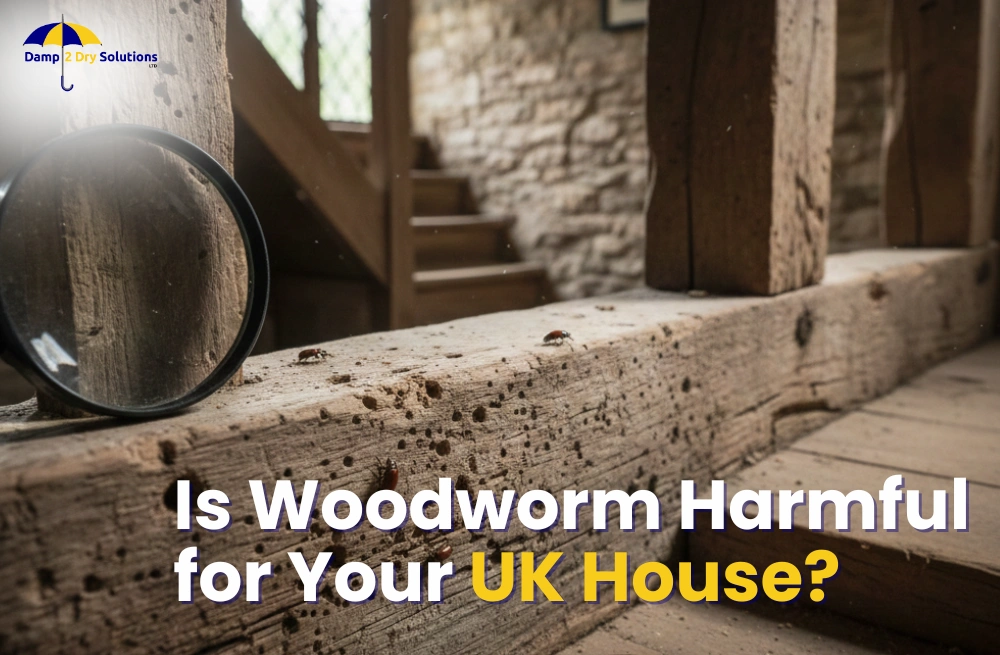
Spotting tiny holes in a timber beam or a dust-like powder on the floor can be unsettling. Woodworm is a common issue in UK homes, particularly in older properties, and while it may look minor at first glance, the long-term impact can be far more serious than many homeowners realise.
Woodworm refers to the larvae of wood-boring beetles that slowly eat their way through timber, weakening it from the inside out.
The real question is not whether woodworm exists in UK houses, but whether it is harmful enough to worry about. The short answer is yes, and in some cases, very much so.
Why Woodworm Is a Real Concern for UK Homes?
Woodworm damage is rarely dramatic in its early stages. That is what makes it dangerous. The larvae can live inside timber for several years, quietly tunnelling through joists, floorboards, roof timbers, and furniture. By the time you notice the tell-tale exit holes, the internal damage may already be extensive.
UK homes are particularly vulnerable because of a combination of factors:
- A high proportion of older housing stock
- Widespread use of structural timber
- Damp conditions that attract wood-boring insects
While not every case leads to structural failure, untreated infestations can seriously compromise the safety, value, and insurability of your property.
Also Read: How to Tell if Woodworm is Active?
How Woodworm Damages Structural Timber?
One of the biggest problems with woodworm is that the damage happens out of sight. The larvae feed within the timber, leaving only small exit holes when they mature and emerge as beetles. Those holes represent the end of the lifecycle, not the start.
Inside the wood, larvae create a network of tunnels that reduce the timber’s load-bearing capacity. Over time, this can affect:
- Floor joists that begin to flex or bounce
- Roof timbers that lose strength
- Staircases that feel unstable
- Lintels and beams that no longer support weight properly
In severe cases, timber can become so weakened that it crumbles under pressure.
Which Areas of Your UK House Are Most at Risk?
Woodworm tends to target areas where timber is exposed or where moisture levels are higher. Common problem spots include:
- Lofts and roof spaces with poor ventilation
- Cellars and basements
- Suspended timber floors
- Timber window frames and door frames
- Old furniture stored in damp rooms
Structural timbers are the biggest concern, as damage here affects the safety of the entire house.
How Woodworms Affect Property Value in the UK?
Having woodworms is bad for your property’s health but it also affects the overall value you can pull from a property survey.
Impact on Surveys and Mortgages
If you are selling your home, woodworm can become a serious obstacle. Surveyors are trained to flag any signs of active or past infestation. Even historic woodworms can raise red flags if there is no proof of professional treatment.
Mortgage lenders may:
- Request evidence of treatment
- Insist on a specialist timber report
- Retain part of the mortgage until repairs are completed
This can delay sales or reduce buyer confidence, often leading to renegotiated prices.
Insurance Implications
Most buildings insurance policies in the UK do not cover woodworm damage as standard, as it is classed as gradual deterioration rather than sudden damage. If infestation is left untreated and later causes structural issues, you may find yourself paying for repairs entirely out of pocket.
What Else Does Woodworm Destroy Other Than Your Property?
Woodworm damage is not limited to structural timbers. Once present, it can spread into many wooden elements inside your home, often going unnoticed until the damage is advanced.
- Antique and modern furniture: Chairs, tables, cabinets, and wardrobes can be attacked from the inside. Damage may look minor at first, but over time joints weaken, legs loosen, and items can become unsafe or beyond repair.
- Skirting boards and architraves: These are commonly affected, especially in older properties or rooms with damp walls. Damage here often signals a wider infestation nearby.
- Wooden panelling and decorative timber: Wall panelling, beams, and decorative features can lose strength and visual appeal as tunnelling spreads beneath the surface.
- Stair spindles, handrails, and balustrades: Woodworm in stair components is a safety concern. Timber can weaken internally, increasing the risk of movement or failure.
- Timber flooring: Floorboards in suspended timber floors are particularly vulnerable. Affected boards may feel soft underfoot, become uneven, or start to creak excessively.
- Fitted joinery and cupboards: Built-in wardrobes, cupboards, and shelving units can suffer damage, especially when installed against damp or poorly ventilated walls.
While some of this damage may appear cosmetic initially, woodworm weakens timber from the inside. Left untreated, it can turn everyday household woodwork into a costly repair problem.
What Is The Connection Between Woodworms & Damp?
Woodworm beetles are attracted to timber with higher moisture content. Damp conditions soften the wood, making it easier for larvae to feed. This means woodworm is often a symptom of a wider problem rather than an isolated issue.
Common underlying causes include:
- Rising damp
- Condensation in poorly ventilated spaces
- Roof leaks
- Plumbing leaks
- Blocked air vents under floors
Treating woodworm without addressing damp is a short-term fix at best. The infestation may return if the conditions remain favourable.
Is Woodworm Dangerous to People?
From a health perspective, woodworm is not harmful to humans or pets in the way mould or asbestos can be. The beetles do not bite, and the larvae stay within timber.
However, the danger comes from weakened structures. A compromised floor, staircase, or roof beam presents a genuine safety risk. In extreme cases, structural failure can lead to injury or make parts of the house unsafe to use.
Signs That Woodworm Damage Is Serious
Some warning signs suggest the problem may be more advanced and harmful:
- Numerous exit holes clustered in one area
- Fine, fresh dust beneath holes
- Timber that feels soft or breaks easily
- Sagging floors or ceilings
- Doors and windows sticking due to movement
If you notice any of these, it is time to take action rather than monitor the situation.
Can Woodworm Damage Be Repaired?
Yes, woodworm damage can be repaired or treated very easily. But depending on the degree of the damage, different methods may be used.
Woodworm treatment kills the active infestation but does not reverse existing damage. Depending on the severity, repairs may involve:
- Strengthening weakened timbers
- Replacing severely damaged joists or beams
- Installing new treated timber alongside old
- Improving ventilation and damp control
Early intervention keeps repair costs manageable. Delaying action often leads to more invasive and expensive work.
Why DIY treatment Is Rarely Enough for Woodworms?
Surface sprays and off-the-shelf products may kill adult beetles, but they often fail to penetrate deeply enough to reach larvae. Professional treatments are designed to soak into the timber and provide long-term protection.
More importantly, a specialist can assess whether the damage is cosmetic or structural, something that is difficult to judge without experience.
Worth Reading: DIY Damp Detection vs Professional Damp Survey
How to Protect Your House from Woodworm Infestation?
Prevention is always easier than cure. Practical steps include:
- Keeping timber dry and well ventilated
- Fixing leaks promptly
- Ensuring air bricks are clear
- Avoiding storing untreated timber in damp areas
- Having periodic timber inspections, especially in older homes
A proactive approach reduces the risk of infestation and protects the long-term value of your property.
Also Read: How Long Does Woodworm Treatment Last?
Ending On
Woodworm is more than a cosmetic issue. While not every infestation leads to major structural damage, the potential risks are significant enough that it should never be ignored. From weakened timbers and costly repairs to disrupted house sales and insurance complications, the impact can ripple through every aspect of home ownership.
The key is early identification, proper treatment, and addressing any underlying damp issues. If you are unsure whether woodworm in your home is active or harmful, a professional assessment can give you clarity and peace of mind.
If you need expert advice or treatment for woodworm damage to property and other woodwork, Damp2Dry Solutions Ltd can carry out a thorough inspection and recommend the right solution to protect your home for the long term.
