

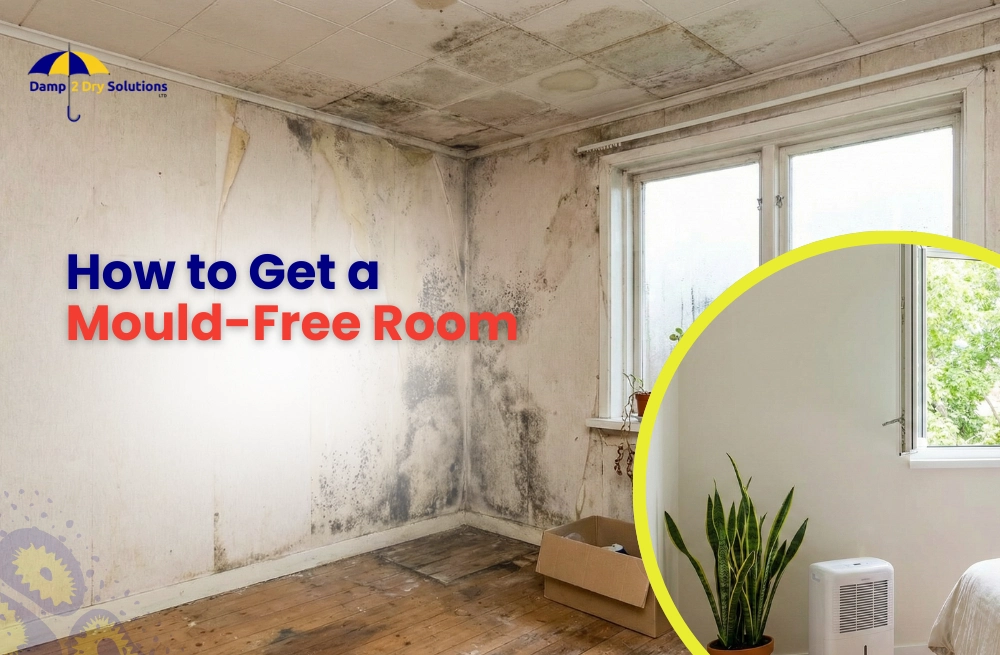
Mould sneaks into a room the same way bad habits creep into life, slowly, quietly, and suddenly everywhere. One week you spot a tiny patch in the corner, and the next your walls smell musty and your window frames look like they’ve aged 20 years.
The good news? You can absolutely reclaim a mould-free room, and keep it that way, without turning your home into a construction site.
This guide breaks down the real reasons mould forms, the quick fixes, and the long-term strategies that UK homeowners rely on to stop mould returning.
Why Your Room Gets Mouldy in the First Place
Before you tackle mould, you need to understand it. Think of mould as the unwanted guest that only shows up when conditions are just right:
- Excess moisture
- Poor airflow
- Cold surfaces
- Organic material to feed on
As the NHS warns, “Damp and mould can have serious effects on your health, particularly if you have respiratory issues.” In other words, this isn’t just an eyesore, it’s a wellbeing issue.
And because UK homes experience long wet seasons, older brickwork, and high indoor humidity, mould has plenty of opportunities to grow.
Step 1 – Remove Existing Mould Safely
Yes, you can clean mould yourself, if it’s minor and hasn’t penetrated deeply into walls or ceilings.
What You’ll Need
- A mask and gloves
- Warm water with washing-up liquid
- White vinegar or a mould-removal spray
- A microfibre cloth
- A gentle brush
Cleaning Process
- Open windows for airflow.
- Avoid dry brushing, it spreads spores.
- Wipe the area with your solution.
- Leave vinegar for at least one hour before rinsing.
- Pat the area dry completely.
Important: If the mould is widespread, black, or keeps coming back, the UK Health Security Agency advises calling a damp specialist, because cleaning without fixing the cause is just “painting over a leak.”
Step 2 – Control Moisture (The Real Secret to a Mould-Free Room)
If mould is fire, moisture is the fuel. Remove the fuel and the fire dies.
Use a Dehumidifier
A dehumidifier is essentially a “moisture vacuum.”
It pulls water from the air and keeps humidity below mould’s favourite threshold, about 60%.
Great for:
- Bedrooms
- Basements
- Rooms with limited ventilation
Improve Ventilation
Ask yourself: Does this room have fresh air moving through it daily?
If the answer is “not really,” then:
- Open windows for 10–15 minutes each morning
- Keep interior doors open to allow airflow
- Add trickle vents if your windows allow it
Even small changes help. As one building expert puts it, “Ventilation is not a luxury, it’s the lungs of your home.”
Step 3 – Reduce Condensation on Cold Surfaces
Condensation is like tiny raindrops forming on your walls and windows. Those droplets are pure gold for mould.
Simple strategies include:
- Use thermal curtains to keep walls warmer
- Place furniture 2–3 inches away from cold walls
- Apply anti-condensation paint
- Warm the room slightly during colder months
If your bedroom has mould above a window, this is often the cause.
Step 4 – Check for Hidden Damp Sources
Sometimes the mould isn’t about lifestyle, it’s about the house.
Common culprits include:
- Penetrating damp from cracked brickwork
- Leaking gutters or downpipes
- Rising damp from the ground
- Faulty window seals
- Roof leaks
A good analogy?
Trying to clean mould without finding the damp source is like mopping the floor while the tap is still running.
If you’re unsure, a professional damp survey can pinpoint the exact cause. They use moisture meters, thermal imaging, and experience to diagnose the issue properly.
Step 5 – Keep the Room Warm Without Overspending
Cold rooms equal cold surfaces, and mould loves cold surfaces.
Smart heating habits:
- Maintain a steady low heat rather than “blast heating”
- Use thermostatic radiator valves
- Improve insulation in walls and lofts
- Install energy-efficient windows if feasible
Even small upgrades reduce condensation dramatically.
Step 6 – Rethink Daily Habits That Invite Mould
Many people unknowingly create the perfect environment for mould.
Avoid Drying Laundry Indoors
Indoor drying releases up to 2 litres of water into the air from a single load.
If you must dry clothes indoors:
- Use a heated drying rack with ventilation
- Place a dehumidifier nearby
Keep Lids on Pots When Cooking
Steam travels, yes, even into bedrooms.
Use Extractor Fans in Bathrooms
Leave them running 10–15 minutes after showering.
Small changes = big mould prevention.
Step 7 – Use Mould-Preventing Products That Actually Work
Not all anti-mould products are created equal.
Some are basically scented water. Others genuinely help.
Here’s what works:
- Anti-mould paint additives
- Breathable masonry creams (for external protection)
- Mould-resistant silicone around windows and bathrooms
- Moisture traps for wardrobes and cupboards
These products work almost like a “non-stick coating” for your walls — not perfect, but extremely effective at keeping mould from settling in.
Step 8 – Inspect Regularly (Your Home Needs Check-Ups Too)
Just like you’d service your car, your room needs check-ups.
Every few weeks, check the usual hotspots:
Common mould zones
- Behind furniture
- Around window frames
- Corners of ceilings
- Behind curtains
- Wardrobes against external walls
Catch it early and prevention becomes much easier.
Step 9 – When to Bring in a Specialist
Sometimes mould is just the symptom of a deeper problem.
If you notice:
- A damp, musty smell that never goes away
- Peeling wallpaper
- Tide marks on walls
- Black mould spreading across surfaces
- Condensation even in warm rooms
…then it’s time to call a damp-proofing expert.
As the Property Care Association notes, “Mould removal without damp control is never a permanent fix.”
Professionals can diagnose:
- Rising damp
- Penetrating damp
- Leaks
- Structural moisture issues
And provide tailored solutions like:
- Damp-proof course treatments
- Ventilation upgrades
- Tanking for basements
- External waterproofing
Also read: Types of Mould Colours – A Mould Colour Guide
Final Tips for Keeping a Mould-Free Room Long Term
Here’s your quick checklist for a consistently mould-free space:
| Timeframe | Actions to Take |
|---|---|
| Daily | • Open windows for 10 minutes • Wipe condensation from windows |
| Weekly | • Check behind furniture • Clean extractor fan filters • Empty dehumidifier tanks |
| Seasonally | • Inspect exterior brickwork • Test heating and ventilation • Look for leaks after storms |
Consistency beats intensity every time.
Also read: Everything You Need To Know For Maintaining Damp-Free Interiors
Conclusion
Getting rid of mould isn’t about expensive products or constant scrubbing, it’s about controlling moisture, improving airflow, and knowing where the problems start.
Think of it like maintaining your health: You don’t wait for symptoms to get worse, you take small daily steps to stay well. Once you understand what mould needs to survive, you take its power away. And your home becomes healthier, fresher, and far more comfortable to live in.
