
If a survey has mentioned dry rot in a property you are buying or selling, it can feel worrying. The words sound serious, and many people immediately think the house must have major structural problems.
In reality, dry rot is a common issue in older UK homes and, in most cases, it can be treated. The important thing is to understand what it means and what you should do next.
Here is a simple guide to help you move forward calmly and confidently.
What Does It Mean When a Survey Mentions Dry Rot?
Most home surveys are carried out by general building surveyors. They are trained to spot warning signs, but they are not timber decay specialists.
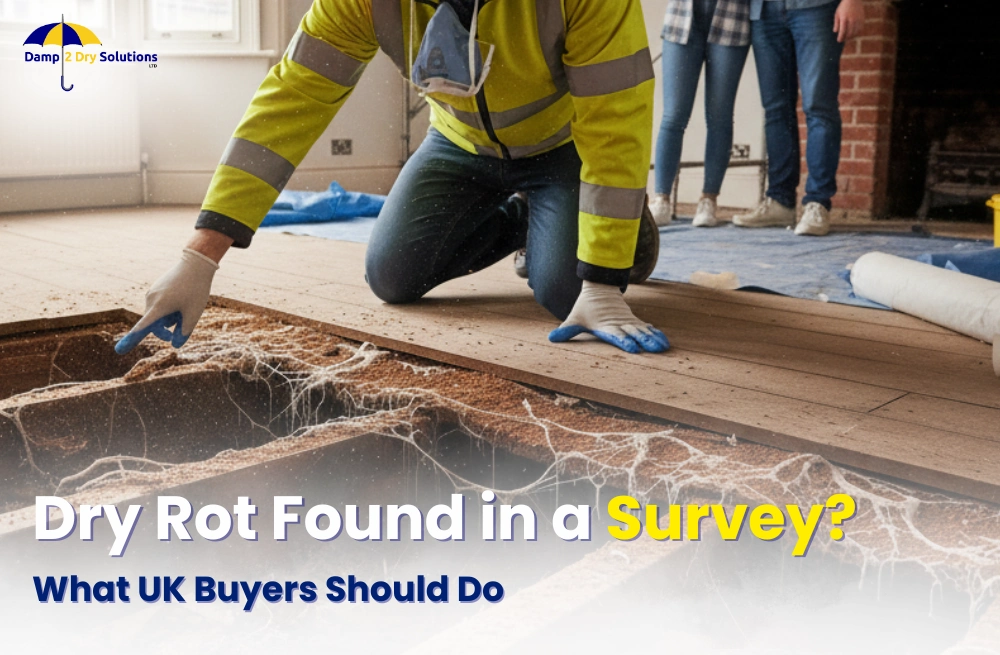
If dry rot is mentioned, it usually means the surveyor has seen:
- Signs of fungal growth
- Damp timber
- Soft or crumbling wood
- A strong musty smell
They will normally recommend a specialist damp and timber inspection to confirm whether it is dry rot and how serious it is.
It does not automatically mean the property is unsafe or that the sale will fall through.
How Serious Is Dry Rot?
Dry rot only develops where timber has been damp for a long time. The seriousness depends on how far it has spread and whether structural timbers are affected.
Minor Cases
Sometimes it is limited to skirting boards or small areas of floorboard. Once the damp problem is fixed, the damaged timber can be replaced.
Moderate Cases
It may affect parts of the floor structure or timber within walls. Repairs are more involved but still manageable.
More Severe Cases
If left untreated for years, dry rot can spread through larger sections of timber, such as floor joists or roof timbers. Even then, it can be repaired, but the cost will be higher.
The key point is this: dry rot needs moisture. If the moisture source is removed, the problem stops spreading.
Why Does Dry Rot Appear in the First Place?
Despite its name, dry rot is caused by damp conditions.
Common causes include:
- Leaking pipes
- Roof leaks
- Blocked air bricks
- Poor underfloor ventilation and sagging floors
- Rising damp
- Penetrating damp
Older properties in the UK often have suspended timber floors. If airflow beneath the floor is reduced, timber can stay damp and become vulnerable to decay.
Fixing the moisture source is just as important as replacing damaged timber.
What Should You Do Next?
If dry rot is mentioned in your survey, follow these steps.
1. Arrange a Specialist Inspection
A damp and timber specialist will examine the affected areas properly. They will check moisture levels, ventilation and the condition of surrounding timbers.
You should receive a written report explaining:
- Whether it is definitely dry rot
- How far it has spread
- What needs to be repaired
- An estimate of costs
2. Identify the Moisture Source
This might be a leak, poor ventilation or an external defect. Without fixing the cause, treatment will not last.
3. Review Repair Options
You can then decide whether to:
- Renegotiate the price
- Ask the seller to carry out the work
- Proceed and arrange repairs after completion
Will This Affect the Mortgage?
Many buyers worry that a mortgage lender will refuse the loan.
In most cases, lenders simply want reassurance that:
- The problem has been properly assessed
- There is a clear treatment plan
- The structure will be made sound
They may request a specialist report before releasing funds. Once treatment is arranged, the sale usually continues.
Dry rot rarely leads to an automatic mortgage refusal unless it has caused severe structural damage and nothing is being done about it.
Can You Still Buy the House?
Yes, very often you can.
Dry rot is not unusual in older UK homes. What matters is:
- The extent of the damage
- The cost of repair
- Your comfort with proceeding
Many buyers successfully complete purchases after dry rot is identified, using the report to agree a fair adjustment in price.
What If You Are Selling?
If you are the seller and dry rot has been raised:
- Do not ignore it
- Arrange a specialist inspection quickly
- Provide buyers with a clear report
Being open and proactive builds trust. Some sellers choose to complete treatment before exchange to avoid delays. Others agree a price reduction instead.
Either way, clarity is better than uncertainty.
How Is Dry Rot Treated?
Treatment usually involves:
- Removing affected timber
- Fixing the source of moisture
- Improving ventilation
- Applying appropriate protective treatment
- Replacing structural timber where needed
The work depends on the scale of the issue. Small areas may be resolved quickly. Larger jobs may take longer.
How Much Does Dry Rot Treatment Cost?
Costs vary widely.
Small localised repairs are usually more affordable. Larger structural work costs more, especially if floors need lifting or significant timber needs replacing.
The only way to get an accurate figure is through a proper inspection.
Will It Delay the Sale?
Most cases do not cause major delays.
A specialist survey can often be arranged within days. Once the report is ready, buyers and sellers can agree on the next steps.
Acting quickly prevents long hold-ups.
Is Dry Rot Dangerous?
Dry rot is not harmful to your health in the same way mould can be. The main risk is structural damage to timber if it is left untreated.
If addressed properly, it does not pose an ongoing danger.
When Should You Involve a Specialist Immediately?
Seek a specialist opinion if you notice:
- Spongy or springy floors
- Cracked or crumbling timber
- Strong musty smells
- Visible fungal growth
- Previous long-term damp issues
The sooner it is inspected, the easier it is to manage.
Final Thoughts
Finding dry rot in a survey can be worrying, but it is rarely the disaster people imagine.
Most cases are treatable once the cause is identified. The key is not to panic, but to get clear advice from a qualified damp and timber specialist.
With the right information, buyers can negotiate fairly, sellers can respond properly and transactions can continue with confidence.
Dry rot is a problem that needs attention, but it is not usually the end of a sale.

Frequently Asked Questions About Dry Rot in a Home Survey
Is dry rot a deal breaker when buying a house?
Not usually. Dry rot can sound serious, but most cases can be repaired once the damp problem is sorted. What matters is how far it has spread and how much it will cost to fix. A proper inspection helps you decide whether to renegotiate or move forward.
Will a mortgage lender refuse a loan because of dry rot?
In most cases, no. The lender may ask for a specialist report and confirmation that repairs will be carried out. Once there is a clear plan in place, lenders normally allow the purchase to continue.
How quickly does dry rot spread?
Dry rot only spreads when timber stays damp. If the source of moisture is removed, it stops spreading. The longer timber remains wet, the more damage can occur.
Can dry rot spread through brickwork?
Dry rot does not damage brick itself, but it can travel across masonry surfaces to reach other timber if damp conditions continue. That is why fixing the moisture source is so important.
Is dry rot expensive to fix?
Costs depend on how much timber is affected. Small areas are usually less expensive to repair than large structural sections. A proper inspection is needed before you know the likely cost.
Should the seller fix dry rot before exchange?
There is no fixed rule. Some sellers choose to carry out repairs before exchange to avoid delays. Others agree a reduction in price so the buyer can arrange the work after completion. It depends on what both sides agree.