
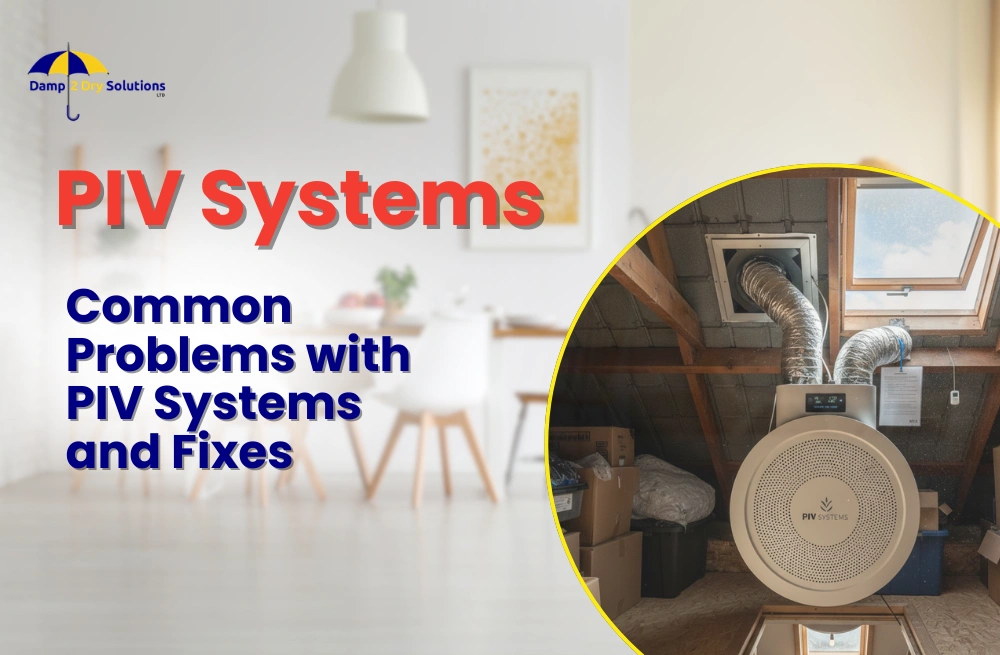
Positive Input Ventilation, commonly known as a PIV system, has become a popular solution for condensation, mould, and stale air in UK homes. It works by gently introducing filtered fresh air into the property, usually from the loft, creating a slight positive pressure that pushes damp air out through natural leakage points.
In many cases, PIV systems are highly effective. But like any mechanical ventilation solution, they are not foolproof. When installed incorrectly, poorly maintained, or used in the wrong property type, they can cause confusion and frustration.
Below are the most common problems with PIV systems in UK homes, why they happen, and how to fix them properly.
1. The PIV System Is Not Reducing Condensation
You installed a PIV system expecting windows to stop streaming, yet condensation still appears each morning.
Why It Happens
A PIV system reduces airborne moisture levels, but it cannot fix:
- Ongoing water ingress
- Rising damp
- Blocked air bricks
- Excessive moisture production from lifestyle habits
If the underlying issue is structural damp rather than condensation, the system will not solve the problem.
The Fix
First, confirm the type of damp you are dealing with. If you notice tide marks, peeling plaster, or damp patches at low wall level, you may have rising damp rather than surface condensation. In that case, professional damp diagnosis is required.
Also ensure:
- Air bricks are clear
- Internal doors are not permanently closed
- Background ventilation exists in the property
A PIV works best as part of a wider moisture management strategy.
2. The House Feels Cold After Installation
Homeowners often report that rooms feel cooler after a loft-mounted PIV unit is installed.
Why It Happens
Standard PIV systems draw air from the loft. In winter, loft air is cold. While modern units are energy efficient, they do not always include heaters.
If airflow settings are too high, cold air can be noticeable.
The Fix
- Adjust airflow to match property size
- Ensure loft insulation is correctly installed and not blocking intake
- Consider a PIV unit with an integrated heater if the property is particularly cold
In many cases, once airflow is balanced correctly, the temperature difference becomes minimal.
3. Noise From the Unit
A humming, vibrating, or constant background noise becomes noticeable, especially at night.
Why It Happens
Common causes include:
- Unit installed too close to ceiling joists
- Ducting poorly secured
- Fan speed set unnecessarily high
- Dust build-up affecting fan balance
Poor installation is usually the main reason for noise complaints.
The Fix
- Check mounting brackets are secure
- Ensure anti-vibration pads are fitted
- Reduce fan speed if airflow allows
- Replace or clean filters regularly
If noise continues, a professional installer should inspect the system.
3. Noise From the Unit
A humming, vibrating, or constant background noise becomes noticeable, especially at night.
Why It Happens
Common causes include:
- Unit installed too close to ceiling joists
- Ducting poorly secured
- Fan speed set unnecessarily high
- Dust build-up affecting fan balance
Poor installation is usually the main reason for noise complaints.
The Fix
- Check mounting brackets are secure
- Ensure anti-vibration pads are fitted
- Reduce fan speed if airflow allows
- Replace or clean filters regularly
If noise continues, a professional installer should inspect the system.
4. Mould Is Still Appearing
Despite the PIV system running, mould growth continues in corners or behind furniture.
Why It Happens
PIV systems improve overall air quality, but mould can still grow if:
- Furniture is tight against cold external walls
- Thermal bridging exists
- The property has poor insulation
- There is penetrating damp
Remember, mould needs moisture and cold surfaces. A PIV reduces humidity but does not eliminate cold bridging.
The Fix
- Leave a gap between furniture and external walls
- Improve insulation where possible
- Address any external leaks or cracks
- Check for blocked gutters or roof defects
If mould is localised to one wall only, structural damp may be the root cause.
5. Excessive Dry Air
Some homeowners complain of dry air, static electricity, or irritation in winter.
Why It Happens
When humidity drops below 40%, air can feel uncomfortable. Over-ventilation is often the cause.
The Fix
- Reduce fan speed
- Ensure humidity sensors are working correctly
- Avoid running the system at maximum setting unnecessarily
Modern PIV units with humidity control help regulate airflow automatically.
6. Loft Condensation After Installation
Condensation appears in the loft after fitting a PIV system.
Why It Happens
A PIV unit draws air from the loft space. If the loft is poorly ventilated, moisture levels may rise temporarily.
Alternatively, the property may already have a loft ventilation issue unrelated to the PIV.
The Fix
- Ensure soffit vents and ridge vents are clear
- Avoid blocking ventilation with insulation
- Confirm the loft has adequate airflow
In most cases, correcting loft ventilation resolves the issue.
7. The System Is Running but There Is No Noticeable Difference
The unit appears operational, but the property still feels stale.
Why It Happens
Possible reasons include:
- Filters clogged with dust
- Incorrect airflow settings
- Duct disconnected or obstructed
- Property too airtight for natural leakage
A PIV relies on air escaping through small gaps around windows, doors, and vents.
The Fix
- Replace filters annually
- Inspect ducting
- Ensure trickle vents are open
- Confirm the diffuser is not blocked
Routine maintenance is essential. A neglected PIV system becomes ineffective.
8. High Electricity Bills
Energy costs rise unexpectedly after installation.
Why It Happens
While PIV systems are designed to be low energy, problems arise if:
- Heater function runs constantly
- Fan speed is set too high
- System is oversized for the property
The Fix
- Optimise fan speed
- Use heater only when necessary
- Confirm the correct model was selected for property size
When correctly installed, a PIV should cost very little to operate annually.
When a PIV System Is Not the Right Solution
It is important to understand that a PIV system is designed primarily to manage condensation and improve indoor air quality. It is not a cure for:
- Rising damp
- Penetrating damp
- Leaking roofs
- Faulty gutters
- Failed damp proof courses
In the UK, many properties have multiple moisture sources. Installing a PIV without a proper damp survey can lead to disappointment.
Maintenance Tips for UK Homes
To keep a PIV system performing effectively:
- Replace filters every 12–24 months
- Check airflow settings seasonally
- Ensure loft ventilation remains clear
- Keep internal doors open where possible
- Avoid blocking vents
A small amount of annual maintenance prevents most common problems.
Final Thoughts
PIV systems are a useful solution for many UK homes struggling with condensation. However, they are not a magic fix for every damp issue. Most problems arise from incorrect installation, poor maintenance, or misdiagnosis of the underlying cause.
If your property continues to experience damp, mould, or condensation despite running a PIV system, the safest step is a professional assessment. Identifying whether the issue is lifestyle condensation, ventilation imbalance, or structural damp makes all the difference.
Moisture problems in UK homes are rarely one-dimensional. The right fix starts with the right diagnosis.
If your PIV system is not solving the problem, Damp 2 Dry Solutions provides expert damp surveys and targeted treatments across Cheshire, Manchester, Liverpool, Warrington, Chester, Stoke-on-Trent and Newcastle to fix the root cause properly.